 StackScopes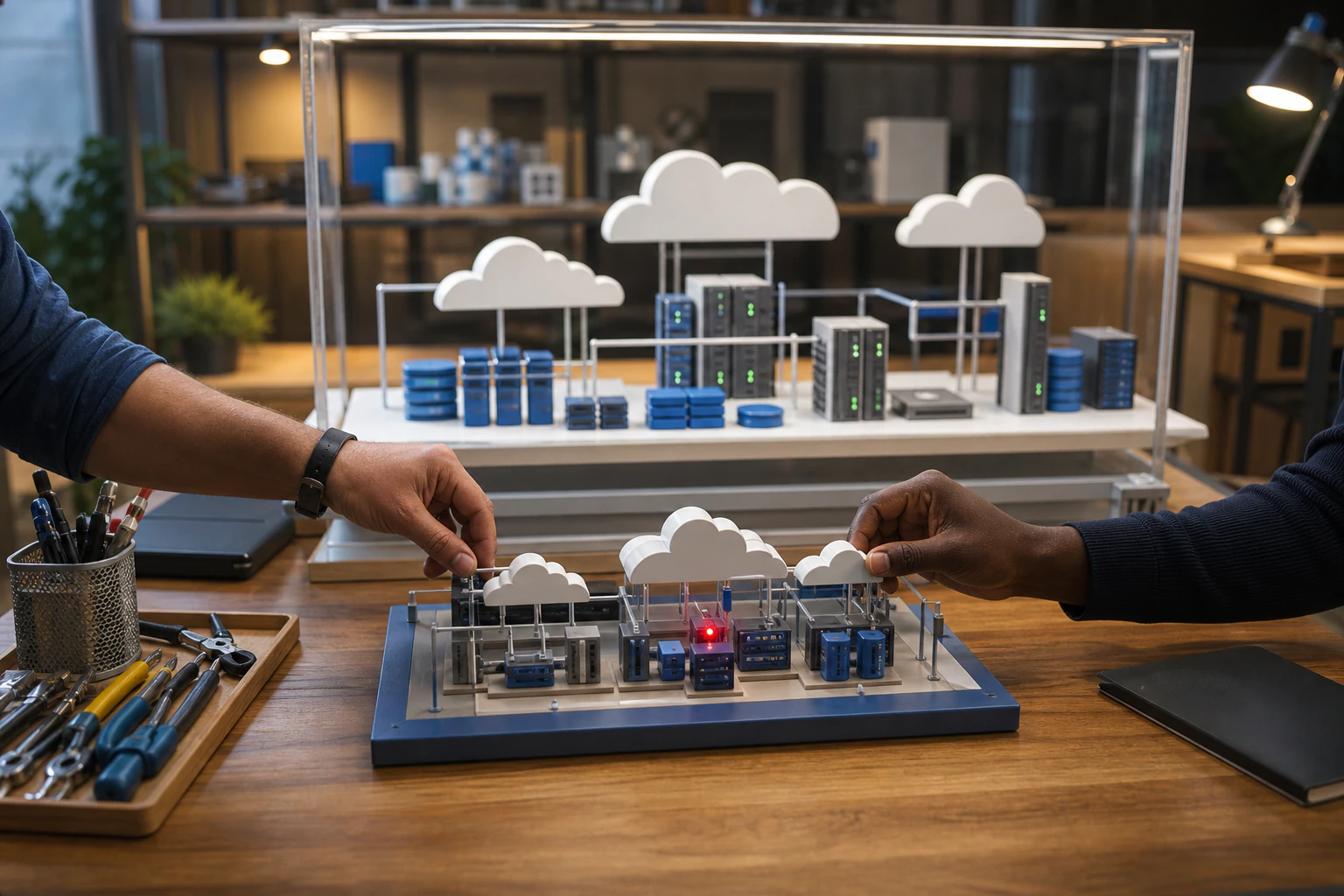
Cloud teams need to understand failure, but they cannot treat every production dependency as a safe experiment. A database outage, inaccessible KMS key, broken route, or unavailable queue can reveal important behavior while also creating real customer impact. Staging environments reduce risk, yet they rarely reproduce production topology, traffic, data volume, shared services, account boundaries, or recovery constraints exactly.
Model-based cloud failure simulation offers another layer of learning. It applies a defined failure or degradation scenario to a digital model of infrastructure and traces potential effects through dependencies, alternative paths, timing assumptions, and recovery prerequisites. The analysis occurs against the model; it does not intentionally stop or corrupt production resources.
That distinction makes simulation useful early in resilience work and during change review. It also creates a responsibility: results must be framed as evidence-backed projections, not guaranteed predictions. This article explains how model-based simulation works, how it differs from chaos engineering, which assumptions it needs, how failure propagates, how time and fallback change outcomes, and how teams can validate and use results safely.
Table of contents
- What model-based failure simulation is
- Why not every question belongs in production
- Failure simulation and chaos engineering
- The model behind a useful simulation
- Define the scenario precisely
- Propagate effects through dependencies
- Represent time-to-impact
- Evaluate fallback and redundancy
- Connect resource impact to customer impact
- Build recovery options into the output
- A hypothetical Redis failure simulation
- Validate the model
- Safety, governance, and human review
- Fidelity limits and trade-offs
- Adoption workflow
- Key takeaways
- Frequently asked questions
What model-based failure simulation is
Model-based failure simulation evaluates a hypothetical condition against a representation of a cloud environment. The representation can include:
- AWS resources and current configuration
- Typed dependency relationships
- Application workloads and capabilities
- Account, Region, and Availability Zone boundaries
- Required and optional paths
- Redundancy and fallback
- Configuration and runtime evidence
- Historical infrastructure state
- Operational properties such as criticality, RTO, and recovery prerequisites
The scenario modifies one or more modeled properties. A node may become unavailable, a route may stop carrying traffic, a permission may be removed, latency may increase beyond a threshold, or a proposed deployment may replace a shared resource. A propagation engine then evaluates dependent paths and classifies potential outcomes.
The output should answer:
- What condition was simulated?
- Which resources are directly affected?
- Which workloads are transitively affected?
- Which paths remain available?
- How may the impact change over time?
- Which assumptions drive the result?
- Which evidence supports each dependency?
- Where is coverage incomplete?
- Which recovery options and validation steps apply?
Simulation is most useful when it is reproducible. Teams can run the same scenario after architecture changes, compare results against an earlier topology, or review how a proposed change alters exposure.
It is not a copy of production execution. It does not reproduce every network packet, database lock, application retry, managed-service control plane, or human response. It is an operational reasoning tool.
Why not every question belongs in production
Production experiments can produce high-fidelity learning because they exercise the real system. They can also affect real users, data, operational teams, and downstream providers. Whether an experiment is appropriate depends on engineering maturity, controls, rollback, observability, and the failure mode.
Some questions are difficult to test directly:
- What if a shared production KMS key becomes inaccessible?
- What if an account-level identity dependency is lost?
- Which customer capabilities share an unrecognized VPC endpoint?
- What is the impact of a full Region assumption?
- What would a Terraform resource replacement affect?
- Which recovery order is required after several dependencies fail?
A team may eventually test a carefully constrained version in staging, a game day, or a production chaos program. Before doing so, it benefits from knowing the likely dependency paths and instrumentation gaps.
Model-based simulation provides that preliminary map. It can identify an unexpected shared dependency, an owner who needs to participate, or a fallback assumption that lacks evidence. This makes later tests safer and better scoped.
It also improves routine change review. A network policy or IAM change can be evaluated against current topology without applying it first. The analysis may reveal a path that deserves a canary deployment, added observability, or owner confirmation.
The purpose is not to avoid all real testing. It is to choose experiments deliberately and to learn from the model before production becomes the teacher.
Failure simulation and chaos engineering
Model-based simulation and chaos engineering both investigate resilience, but they use different mechanisms.
Model-based simulation
Simulation changes the modeled state. It is:
- Non-destructive to production by design
- Fast to repeat
- Suitable for broad hypothetical scenarios
- Useful before deployment
- Dependent on topology quality and assumptions
- Less faithful to application and managed-service behavior
Chaos engineering
Chaos engineering introduces controlled conditions into a real environment to test a hypothesis about system behavior. Depending on scope, the environment may be staging or production. A mature practice defines steady state, limits blast radius, monitors safeguards, and stops when conditions exceed thresholds.
Chaos experiments are:
- Behaviorally closer to the exercised system
- Able to reveal undocumented application responses
- Dependent on observability and operational readiness
- Potentially risky
- More expensive to coordinate
- Constrained to scenarios teams can safely execute
A combined learning loop
The practices are complementary:
- Use the digital model to identify critical dependencies and candidate scenarios.
- Run model-based simulation to estimate impact and expose assumptions.
- Select a safe subset for staging or controlled chaos testing.
- Observe actual behavior.
- Update dependency types, timeouts, fallback, and confidence.
- Rerun simulation with the improved model.
For example, simulation may predict that an application can operate for 15 minutes using cached configuration. A controlled experiment could validate the cache behavior. If actual degradation begins after eight minutes, the model should be corrected.
Neither practice is universally superior. Simulation offers breadth and safety; chaos testing offers stronger behavioral evidence. Good resilience engineering uses each where it fits.

The model behind a useful simulation
A simulation engine cannot compensate for a context-free inventory.
Resources and identity
Every resource needs stable identity across account, Region, service, and lifecycle. A database, secret, route, role, or endpoint must map consistently across discovery sources.
Typed relationships
“Connected to” is insufficient. The model should know whether a workload reads, writes, assumes, routes through, decrypts with, resolves through, publishes to, or consumes from a resource.
Dependency behavior
For simulation, relationships need operational properties:
- Required
- Optional
- Degradable
- Buffered
- Redundant
- Fallback
- Administrative
- Unknown
The model may also retain timeout, retry, cache, capacity, and activation assumptions where evidence exists.
Temporal state
The active topology should correspond to the simulation’s reference time. Teams may simulate current state, a historical incident state, or a proposed future state from an infrastructure plan.
Workload and customer context
Resources should connect to workloads, capabilities, owners, and tenant groups when available. Otherwise the output stops at cloud assets and cannot explain operational impact.
Evidence and confidence
Each relationship and behavior assumption should have provenance. Direct configuration, infrastructure-as-code, runtime observations, and human validation carry different meaning.
Coverage
Missing permissions, unsupported services, disabled telemetry, and unknown external dependencies must appear as limitations in the result.
The model does not need perfect coverage to be useful. It needs honest coverage and enough context for the scenario.
Define the scenario precisely
“The database fails” is not a precise scenario. Failure can mean:
- Endpoint unreachable
- Writer unavailable
- Read replica unavailable
- Elevated latency
- Connection exhaustion
- Authentication failure
- Storage full
- Data corruption
- KMS decryption failure
- Regional service disruption
Each condition propagates differently. A read-only reporting workload may tolerate writer loss; authentication failure can affect both reads and writes; elevated latency interacts with client timeouts and thread pools.
A scenario definition should include:
- Target resource or property
- Failure mode
- Start time
- Duration or recovery condition
- Scope
- Severity
- Degradation curve where relevant
- Known exclusions
- Environmental reference state
For a proposed change, the scenario can be property-level. Removing one security-group rule should evaluate matching traffic paths, not declare the entire group failed. Replacing a subnet requires consideration of attached resources and deployment behavior.
Multi-failure scenarios are useful but increase uncertainty. Begin with a single initiating condition, then add correlated failures deliberately. An Availability Zone assumption may affect compute, storage, networking, and capacity simultaneously, but the exact behavior of managed services must follow official AWS documentation and explicit model rules.
The scenario should be readable by an engineer. A short natural-language label can accompany structured parameters, but the engine needs unambiguous inputs.
Propagate effects through dependencies
Propagation converts the scenario into potential downstream states.
Start by determining which capabilities of the target change. If a database writer fails, write capability is unavailable while some read capability may remain. If a route changes, only matching network paths are affected. If a KMS permission is removed, encryption or decryption paths associated with the principal and key need evaluation.
Then traverse dependent edges. Each edge type applies a rule. A required synchronous dependency may propagate unavailable state. An optional analytics event may produce a partial degradation. A buffered queue may delay impact.
Useful state categories include:
- Healthy
- Degraded
- Delayed
- Unavailable
- At risk
- Unknown
The engine should retain the path and reason for every transition. When several paths reach the same workload, evaluate alternatives rather than simply choosing the worst result. A service with two valid database endpoints may remain healthy; a service with two endpoints sharing the same failed key may not.
Propagation can be expressed as a sequence:
- Apply scenario state to the target.
- Identify direct dependent edges relevant to the failed capability.
- Evaluate each edge’s requirement and fallback.
- Set or update dependent state.
- Continue through downstream paths.
- Detect cycles and converge on stable state.
- Project resource state to workloads and capabilities.
- Record assumptions and confidence.
Avoid presenting an opaque score as the only output. Engineers need the causal chain.
Represent time-to-impact
Many dependencies do not fail immediately.
A service may cache credentials until their expiration. A queue can absorb messages while consumers are unavailable. A circuit breaker may switch to a fallback after repeated errors. DNS time-to-live affects how quickly endpoint changes are observed. An asynchronous report may tolerate delayed data until a business deadline.
A temporal simulation can advance through relevant events:
- Failure begins
- Client timeout expires
- Retry budget is exhausted
- Cache reaches expiration
- Queue backlog crosses a threshold
- Fallback activates
- Capacity limit is exceeded
- Recovery step completes
Inputs may come from application configuration, infrastructure state, runtime observations, documented runbooks, or owner-reviewed assumptions. Each should show provenance.
Use ranges when exact timing is unknown. “Impact expected within 5–15 minutes based on cache TTL and refresh jitter” is more credible than “impact at 10:07:32.”
Time-to-impact helps prioritize response and change controls. Immediate customer-facing failure demands different preparation from a backlog that can tolerate an hour. It also reveals when a graceful-degradation mechanism only postpones impact rather than eliminating it.
A visual timeline can show how blast radius expands or contracts. This is more informative than a static red graph.
Evaluate fallback and redundancy
Simulation must distinguish multiple instances from independent paths.
Consider an application deployed in two Availability Zones. Both sets of tasks may depend on one shared NAT gateway, one regional secret, or one database writer. Compute placement is redundant, but the end-to-end capability still contains common dependencies.
For each critical requirement:
- Enumerate alternative paths.
- Remove paths affected by the scenario.
- Check shared dependencies among remaining paths.
- Evaluate activation method.
- Evaluate capacity.
- Evaluate data consistency.
- Record whether the fallback has been tested.
Fallback may be:
- Automatic
- Application-controlled
- Infrastructure-controlled
- Operator-initiated
- Manual workaround
- Planned but unverified
Do not assume the existence of a replica means automatic recovery. Promotion, connection changes, DNS behavior, permission, and application retry can determine whether it is usable.
Capacity is another conditional factor. A remaining Availability Zone may be healthy but unable to handle full traffic. Without verified load and scaling information, report that uncertainty.
The simulation output should show both successful and unsuccessful alternatives. Understanding why a fallback failed can be more valuable than the initial blast radius.
Connect resource impact to customer impact
Engineers can act on resource paths, while incident leaders need capability and customer context.
A model can connect:
resource → workload → service → customer capability → tenant group
These mappings should come from service catalogs, deployment metadata, routing or partition rules, and owner validation. Use minimal tenant identifiers; the simulation rarely needs personal data.
Customer impact states may include:
- Capability unavailable
- Capability degraded
- Processing delayed
- Data potentially stale
- Specific tenant group affected
- Impact unknown due to coverage gap
Avoid converting infrastructure impact into financial loss without a separate verified business model. Do not invent customer counts. It is enough to identify affected capabilities and tenant scopes.
Time matters here as well. A queue outage can be invisible to customers until a processing deadline. A session-store failure may affect only new logins while existing sessions remain valid.
Customer projection should preserve the technical path so stakeholders can update the assessment as evidence changes.
Build recovery options into the output
A simulation that only predicts damage misses an opportunity to improve preparedness.
Recovery options can be derived from:
- Alternative dependencies
- Replicas and backups
- Infrastructure rollback
- Feature flags
- Traffic routing
- Queue replay
- Credential rotation
- Scaling
- Documented runbooks
Each option should include:
- Preconditions
- Required permissions
- Owner
- Dependency-aware order
- Data-risk considerations
- Validation checkpoints
- Rollback or stop condition
- Evidence and uncertainty
Do not convert suggested recovery into unrestricted automation. Discovery and simulation can remain read-only. Any execution path should use separate credentials, narrow policy, audit logging, approval, and post-action verification.
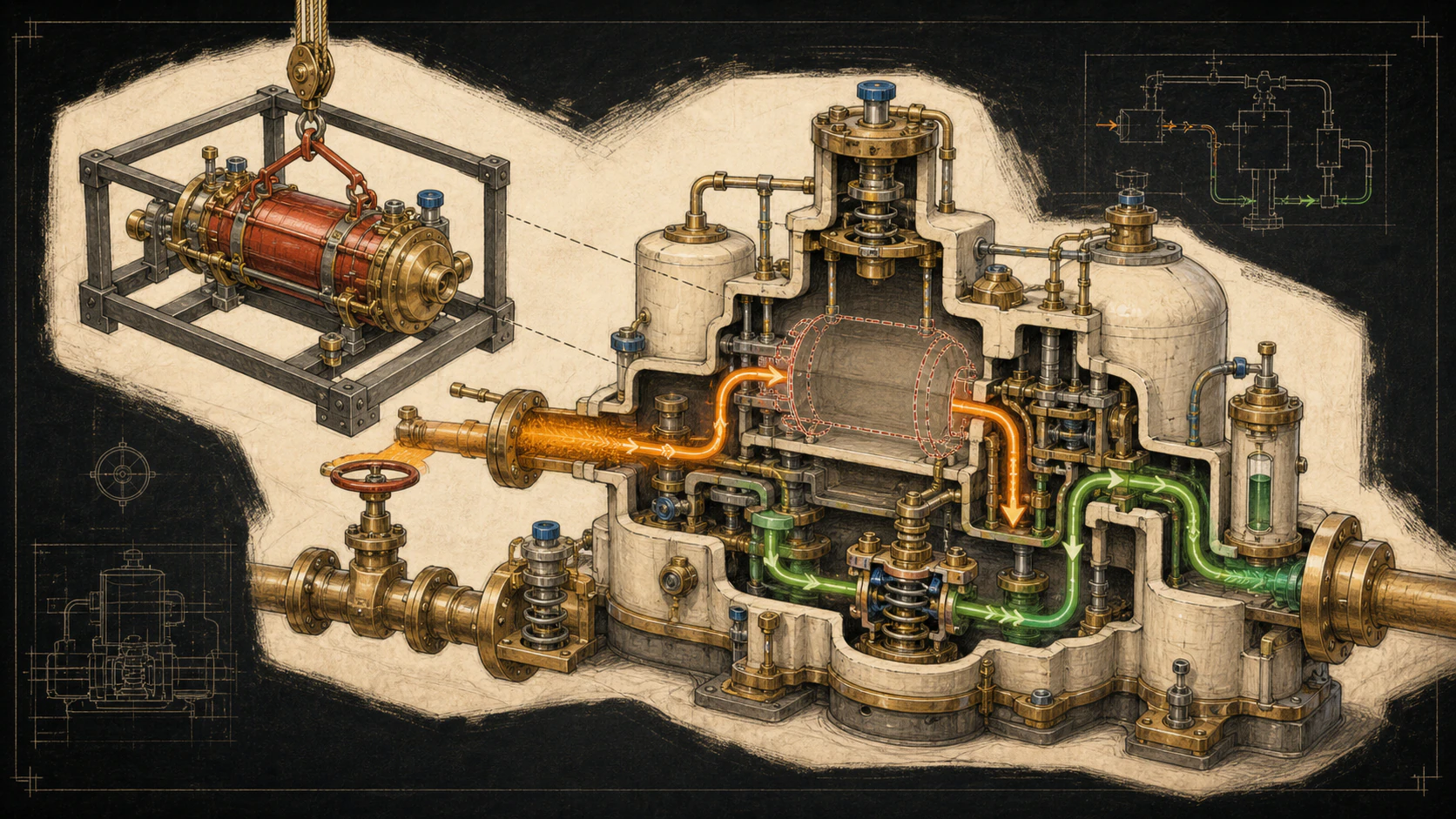
Recovery order matters. Restoring an application before its identity or data dependencies can produce repeated failure. Resuming consumers before data consistency is confirmed can compound damage. A graph can topologically organize prerequisites while still allowing human judgment.
The simulation can also reveal missing recovery knowledge. An affected critical path with no owner, runbook, or verified fallback becomes a resilience backlog item.
A hypothetical Redis failure simulation
Hypothetical scenario: A SaaS platform uses Amazon ElastiCache for Redis in three ways:
- Session state for a web application
- Frequently read product configuration
- Rate-limiting counters for a public API
The environment also includes an Application Load Balancer, ECS services in two Availability Zones, an Aurora database, an SQS queue, and CloudWatch alarms. The Redis replication group is shared by the three workloads.
The simulation assumes the primary endpoint becomes unreachable for 20 minutes. It does not alter the production replication group.
Scenario inputs
- Target: Redis primary endpoint
- Failure mode: connection unavailable
- Duration: 20 minutes
- Reference state: current discovered topology
- Exclusions: no simultaneous database or network failure
- Evidence: task configuration, security-group paths, traces, and owner-reviewed behavior
Direct impact
All three services connect to Redis, but their dependency behavior differs.
The web application treats session storage as required for new requests. Existing client cookies do not contain enough state to continue. After a short retry budget, new and active user flows encounter authentication or session errors.
The product service caches configuration in process with a 15-minute TTL. It continues serving existing configuration until refresh. Its immediate state is healthy with a pending risk.
The API gateway service uses Redis for distributed rate limiting. Its documented behavior fails closed for sensitive endpoints and uses a conservative local limiter for selected public endpoints. The capability becomes degraded rather than fully unavailable.
Transitive impact
When product-service caches expire, configuration refresh fails. Instances retain the last known value for another owner-approved grace interval, after which selected product updates stop. Read paths remain available but can become stale.
Failed session validation reduces order creation, which causes lower queue activity. The queue and fulfillment consumer are healthy. The simulation labels the change in traffic as a symptom rather than an infrastructure failure.
Support tooling that shares the web session service also becomes affected, revealing a dependency omitted from the high-level architecture diagram.
Fallback
The Redis replication group has replicas, but the scenario targets the endpoint capability rather than a single node. The model does not assume automatic failover will solve an endpoint-level networking issue. It shows replica promotion as irrelevant until connectivity is validated.
The product-service in-process cache provides temporary degradation protection. The API local limiter is a partial fallback with reduced consistency.
Time-to-impact
- First minutes: session-related errors begin after client retry.
- Immediate: selected sensitive API endpoints fail closed.
- Up to 15 minutes: product configuration remains cached.
- After cache refresh: product changes may become stale.
- At 20 minutes: scenario ends; recovery still requires connection and application validation.
Customer impact
The simulation projects:
- Login and session-dependent flows potentially unavailable
- Selected public API operations degraded
- Product reads initially available
- Configuration changes delayed later in the window
- Fulfillment infrastructure healthy but receiving fewer new orders
No customer counts are invented. If tenant-routing context existed, the result could scope affected tenant groups.
Recovery options
- Verify whether the issue is endpoint, security group, route, DNS, or Redis node state.
- Confirm fallback behavior from application evidence.
- Restore endpoint connectivity or complete the appropriate managed-service recovery.
- Validate sessions and rate limiting with controlled tests.
- Confirm cache refresh and stale-configuration reconciliation.
- Monitor queue and order flow for recovery.
The simulation does not issue these actions automatically. It organizes a recovery plan with prerequisites and checkpoints.
Lessons
The shared Redis endpoint creates three different impact patterns. A generic graph traversal would mark all dependents down. Typed behavior and time reveal a more accurate progression and show where a single shared cache also serves as session infrastructure.
Validate the model
Simulation quality improves through validation.
Compare with historical incidents
Run a scenario against the topology that existed during a known incident. Compare predicted paths and timing with observed behavior. Differences reveal missing edges or incorrect assumptions.
Use staging or game days
Test selected scenarios in a controlled environment. Staging may differ from production, so validate topology equivalence before generalizing results.
Use chaos experiments selectively
Where maturity and safeguards permit, a limited experiment can validate retries, failover, and fallback. Update the model based on observed behavior.
Review with owners
Show each workload owner the critical dependencies, fallback, time-to-impact, and unknowns. Record review time and preserve raw evidence.
Track coverage
Measure which accounts, Regions, resource types, and telemetry sources are represented. A simulation should warn when the target path crosses an uncovered area.
Validation does not turn the model into certainty. It makes assumptions more explicit and better supported.
Safety, governance, and human review
Model-based simulation is safe because it operates on a model, but the surrounding system still handles sensitive infrastructure information.
Required controls include:
- Least-privilege, read-only discovery
- Separation from remediation roles
- Tenant-aware authorization
- Encryption in transit and at rest
- Data minimization
- Audit logs
- Retention controls
- Evidence visibility
- Approval for production-impacting actions
Scenario outputs can influence decisions, so changes to simulation rules should be versioned and reviewable. A rule that changes how redundancy is evaluated can alter risk conclusions across many workloads.
AI assistance may summarize paths, compare scenarios, or draft investigation questions. It should remain grounded in evidence and should not initiate unrestricted production actions.
Human review is particularly important for high-consequence scenarios, low-confidence dependencies, customer-impact projections, and recovery plans involving data.
Fidelity limits and trade-offs
The model can be incomplete
External providers, application code, transient resources, missing permissions, and disabled telemetry create gaps.
Managed services abstract behavior
Use official AWS documentation for supported failure and recovery behavior, but do not claim knowledge of undisclosed internals.
Application behavior is difficult to infer
Timeouts, retries, caches, feature flags, and error handling may not appear in infrastructure configuration.
Runtime evidence is windowed
Rare paths may not appear. Observed traffic proves use during a period, not permanent criticality.
Simulations can produce false confidence
Clear visual output can look authoritative. Prominently display evidence, assumptions, freshness, and unknown states.
Greater fidelity costs more
Detailed temporal models and runtime correlations require storage, processing, instrumentation, and governance. Model the questions that matter rather than everything indiscriminately.
Safe does not mean sufficient
Simulation cannot replace backups, restore tests, staged deployment, observability, incident practice, or appropriately governed experiments.
Adoption workflow
Start with one critical workload
Choose a capability with known owners and architecture. Establish the current dependency graph and validate it.
Define three scenarios
Use one resource failure, one network or identity failure, and one proposed change. Keep scope understandable.
Document assumptions
Record required edges, fallback, timeouts, caches, and recovery prerequisites. Mark unknowns.
Run and review
Inspect paths with workload owners. Focus on unexpected shared dependencies and missing evidence.
Validate selectively
Use historical comparison, staging tests, or controlled experiments to validate the most important assumptions.
Improve the model
Update rules and context, rerun scenarios, and preserve version history.
Integrate into change review
Evaluate material infrastructure plans against current topology. Use results as review evidence, not an automatic oracle.
Build a scenario library
Maintain versioned scenarios for critical resources, Availability Zones, IAM paths, queues, databases, and shared networking. Review them after architectural change.
Key takeaways
- Model-based cloud failure simulation changes a digital model, not production resources.
- It is useful for early resilience analysis, pre-change review, and scenario planning.
- Precise failure modes produce better results than “resource down.”
- Typed dependencies, fallback, time, and workload context are required for useful propagation.
- Simulation and chaos engineering are complementary.
- Results should show evidence, confidence, assumptions, and coverage gaps.
- Time-to-impact reveals when buffers and caches postpone rather than eliminate impact.
- Recovery options should include prerequisites, approval, and validation.
- Safe simulation does not replace real testing, backups, or incident practice.
Frequently asked questions
Does failure simulation cause an AWS outage?
Model-based simulation operates against a representation of the environment and does not intentionally disrupt production resources.
Is simulation accurate enough to make deployment decisions?
It can provide valuable evidence when topology and assumptions are strong. It should complement review, testing, observability, staged rollout, and rollback planning rather than guarantee an outcome.
Does simulation replace chaos engineering?
No. Simulation provides breadth and safety; chaos engineering provides behavioral evidence from a real environment. They work well in a feedback loop.
What data is needed?
At minimum, resource identity, configuration, typed dependencies, and scenario rules. Workload context, runtime evidence, temporal state, fallback, and recovery objectives improve the result.
Can simulation recommend recovery actions?
It can organize evidence-backed options and dependency order. Production execution should use separate permissions, policy controls, auditability, and human approval.
Conclusion
Resilience work should not begin with a choice between guessing and breaking production. A cloud infrastructure model creates a third option: explore a defined failure against current dependencies, see how impact may propagate, expose uncertain assumptions, and prepare validation and recovery before taking risk.
The method is valuable precisely because it is honest about its limits. Model-based simulation is not a perfect prediction engine. It is a structured way to turn infrastructure evidence into testable resilience hypotheses. Used alongside observability, staged testing, game days, chaos engineering, and controlled recovery, it helps teams ask better questions before an incident forces immediate answers.
Primary sources and further reading
- AWS Well-Architected Reliability Pillar
- AWS Resilience Hub User Guide
- AWS Fault Injection Service
- Amazon ElastiCache replication and high availability
- AWS CloudTrail
- Principles of Chaos Engineering
Related StackScopes reading
Continue exploring
Map the path behind the risk.
Explore cloud topology, failure simulation, blast radius, and evidence-backed recovery with StackScopes.